Crate Training a Cocker Spaniel and Preventing Separation Anxiety
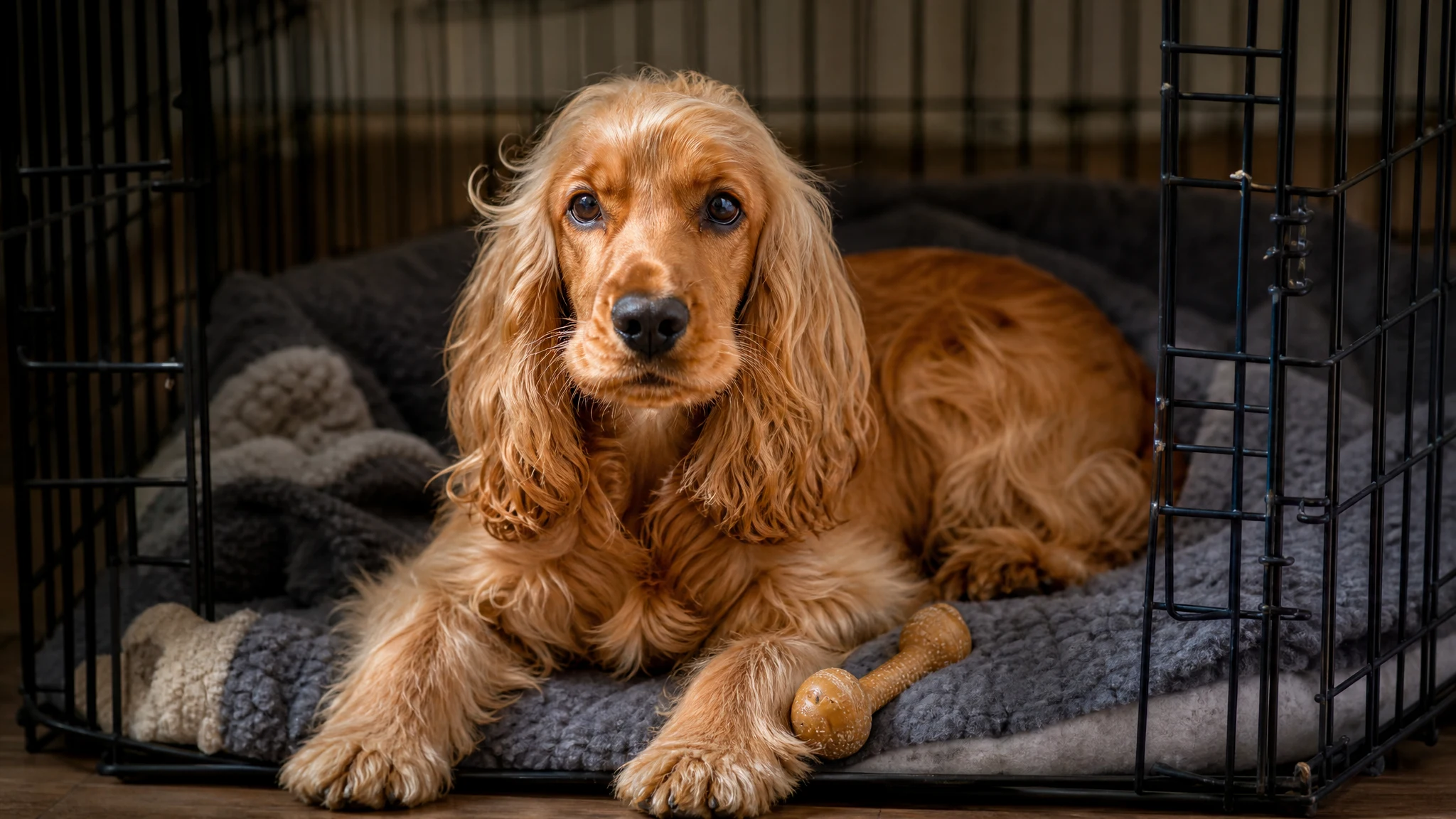
General training information. Every dog is an individual; for health or behavior concerns, see your veterinarian.
Cocker spaniel crate training is one of the most useful things you can do in the first weeks at home. A crate gives your dog a quiet place to rest, helps with house training, and keeps a curious puppy out of trouble when you cannot watch.
It also ties into cocker spaniel separation anxiety. The goal is not to lock a dog away. It is to teach your dog that being alone, and being in the crate, are calm and ordinary parts of the day.
This guide walks through crate training a cocker spaniel in small, patient steps. Every dog is different, so go at the pace your dog sets.
Why a gentle approach suits this breed
The Royal Kennel Club describes the American Cocker as typically gentle, eager to please and well suited to family life. The same page recommends reward-based methods started early and notes that the breed can be sensitive to harsh handling. PetMD also recommends positive reinforcement.
That fits the American Veterinary Society of Animal Behavior (AVSAB) position that reward-based training is the humane choice. For crate work, it means treats, praise and patience. Never push, drag or scold a dog into the crate, and never use the crate as punishment.
The American Spaniel Club breed standard calls for an equable temperament with no suggestion of timidity. Individual dogs still vary, and a nervous cocker needs a slower plan than a confident one.
Materials you will need
- A crate of the right size (see the sizing section below)
- A washable crate pad or blanket
- Small, soft treats your dog loves, cut into tiny pieces
- A stuffable chew toy, such as a hollow rubber toy, filled with something safe for dogs
- A water source for times when your dog is in the crate for longer periods, as your veterinarian advises
- A leash and a regular potty spot for puppies
- A timer or phone for short practice sessions
- A pen or gated area if your dog will need space beyond the crate
Choosing the right crate size for a cocker spaniel
The American Spaniel Club breed standard gives an ideal height of 15 inches at the withers for an adult dog and 14 inches for an adult bitch. PetMD lists the typical weight as 20 to 30 pounds. The ASC standard gives no weight.
Use those numbers as a starting point, not a rule. Here is a simple fit test:
- Your adult dog can stand up without ducking.
- Your dog can turn around easily.
- Your dog can lie down stretched out on one side.
Beyond that, a crate that is too big can make house training harder, because a dog may use one end as a toilet. For a growing puppy, many owners buy a crate sized for the adult dog and use a divider to shrink the space for now. Check the brand's own sizing guidance and divider options, since sizing varies between makers.
Place the crate in a room where the family spends time, such as the living area. Dogs usually settle better when they can see and hear their people at first.
Step-by-step: crate training a cocker spaniel
Step 1: Make the crate a good place
Set the crate up with the door tied open so it cannot swing shut. Add the pad and toss a few treats inside. Let your dog wander in and out on their own.
Do not close the door yet. For now, the only goal is for your dog to think the crate is where good things appear. Drop treats near the entrance, then just inside, then at the back. Mark each step into the crate with a cheerful word like "yes" and a treat.
Step 2: Feed meals in or near the crate
Once your dog walks in happily, serve meals in the crate. Start with the bowl near the door and move it back a little each day. When your dog is eating comfortably inside, you can close the door for the length of the meal, then open it as soon as the bowl is empty.
Add a cue such as "crate" or "bed" when your dog goes in by choice. Reward each time.
Step 3: Close the door for short periods
Ask your dog to go in, give a treat, close the door and sit quietly nearby. Start with a few seconds. Open the door before your dog gets worried, not after. Build up gradually to a minute, then several minutes, then longer.
Offer a stuffed chew toy during these sessions. Chewing gives a dog something calm to do. Keep your voice low and your movements boring.
Step 4: Add distance and short absences
When your dog is relaxed in the crate with you nearby, take a step away. Then two steps, then out of sight for a few seconds. Come back before any fussing starts, reward calm behavior and open the door in a low-key way.
Mix up what you do. Sometimes walk to another room, sometimes pick up your keys and sit back down. This helps your dog learn that these actions do not always mean you are leaving.
Step 5: Build real alone time
Now practice leaving the house for short trips. Start with a few minutes, then ten, then half an hour. Give a chew toy as you go, keep leaving and arriving quiet, and do not make a fuss on return.
Increase time slowly and vary it. If your dog shows distress, you moved too fast. Go back to the last length of time your dog handled well and build up again from there.
Step 6: Plan for the night and for house training
Many owners keep the puppy's crate near their bed at first, so they can hear whimpering that signals a toilet trip. Hill's Pet Nutrition notes that housebreaking can be inconsistent with this breed and that some dogs can be stubborn about it. Expect setbacks and stay consistent.
Take a puppy out right after waking, after meals, after play and before settling in the crate. Reward outdoor toilet trips right away. Young puppies cannot hold it for long, so ask your veterinarian how often your puppy needs to go out for their age.
Preventing separation anxiety
Crate training is only one part of preventing cocker spaniel separation anxiety. The bigger idea is teaching your dog to be comfortable alone, long before it becomes a problem.
- Practice small separations daily. Even when you are home, give your dog short breaks in the crate or behind a gate.
- Keep departures and arrivals calm. Big goodbyes and wild greetings can make the moment of leaving feel important.
- Provide exercise and mental work. Sources disagree on how much exercise this breed needs. PetMD calls it moderate, Hill's Pet Nutrition suggests 20 to 40 minutes a day, and the Royal Kennel Club lists more than two hours. Ask your veterinarian what suits your individual dog.
- Use the field and sport side of the breed. The American Spaniel Club lists field work, agility, rally, obedience, trick dogs and tracking among its programs, and says cockers are well suited to rally. Training games like these can give a dog a good outlet for energy.
- Do not leave a dog crated for too long. A crate is a rest space, not a place to spend the whole day.
Signs of separation distress
Some dogs fuss briefly when left and then settle. That is normal. Distress looks different. Watch for these signs when you are away or about to leave:
- Non-stop barking, howling or whining that does not ease
- Panting, drooling or pacing when you prepare to leave
- Frantic attempts to escape the crate or room
- Toilet accidents in a dog that is otherwise house trained
- Destructive chewing or scratching at doors
- Refusing food or treats when alone
A baby camera or phone app can show how your dog acts once you leave. If your dog is in distress, shorten the time alone, go back a step in training and avoid leaving the dog until you have a plan.
When to see a veterinarian
Call your veterinarian if your dog shows signs of real distress, injures themselves trying to get out of a crate, or has sudden changes in toilet habits or behavior. Many medical problems can look like behavior problems, and only a veterinarian can sort them out.
Ear and skin problems are worth knowing about too. PetMD lists ear infections and skin infections when the coat is not groomed among the breed's common issues. A dog that is itchy or uncomfortable may find it harder to settle in a crate. Ask your veterinarian about ear and coat care.
Your veterinarian may also refer you to a qualified behavior professional if separation distress continues. Do not give medications or supplements for anxiety without veterinary direction.
Tips for success
- Keep sessions short and end on a good note.
- Take the collar off in the crate if your veterinarian or the crate maker advises it, since tags can catch on bars.
- Wash the crate pad often so it stays fresh.
- Give the crate a few quiet toys, but check them often for wear.
- Let your dog rest in the crate at times when you are home, so it does not mean "you are leaving."
Common mistakes to avoid
- Using the crate as punishment. This can make the crate feel unsafe.
- Letting a crying puppy out right away. Wait for a brief pause in the noise when you can, then open the door. If your puppy might need a toilet trip, take them out calmly and put them straight back.
- Moving too fast. Jumping from two minutes to two hours is the most common cause of setbacks.
- Long crate days. If you work long hours, ask your veterinarian about midday breaks or care options.
- Harsh corrections. The Royal Kennel Club notes sensitivity to harsh handling. Stay with rewards.
- Skipping exercise. A dog with no outlet may find it harder to settle.
What results to expect
With steady practice, many dogs learn to go into the crate willingly and rest there quietly. Regular, gradual alone-time practice may help lower the chance of your dog becoming anxious when left. It cannot promise that it will never happen, since some dogs struggle even with good training.
Progress often comes in fits and starts. A puppy may do well for a week and then regress during teething or a change in routine. If that happens, go back to an easier step and keep rewarding calm behavior.
If you are unsure whether your dog's behavior is normal, ask your veterinarian. Calm, consistent, reward-based training gives both of you the best chance of a comfortable routine.