How to Potty Train a Cocker Spaniel Puppy
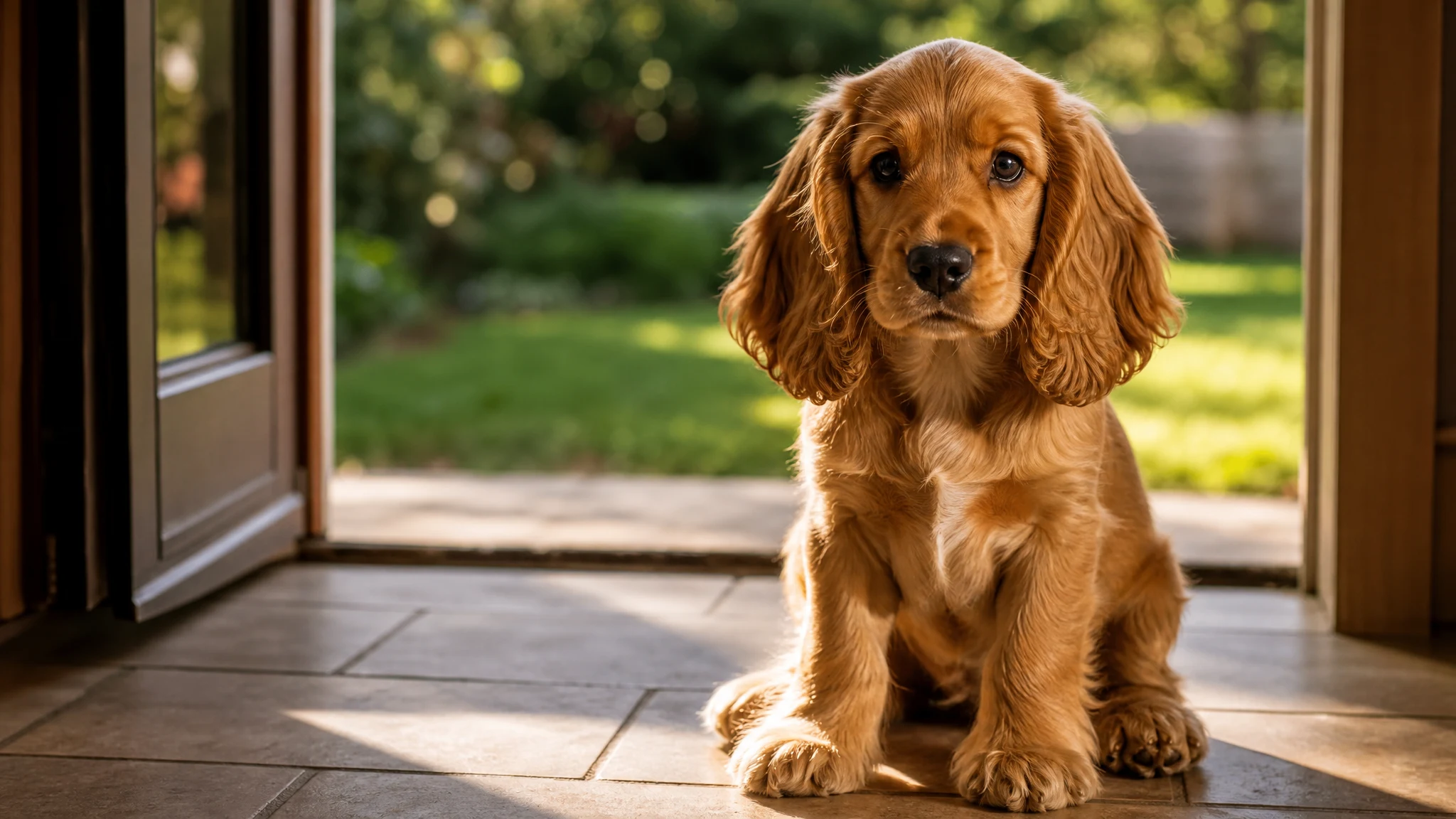
General training information. Every dog is an individual; for health or behavior concerns, see your veterinarian.
If you are wondering how to potty train a Cocker Spaniel, the short answer is this: use a steady schedule, watch closely, and pay your puppy for getting it right. The details matter, though, and the breed adds a few twists.
Cocker Spaniel potty training is mostly about routine and patience. This guide walks you through a schedule-based plan, crate use, what to do after accidents, and a realistic look at how long house training a Cocker Spaniel usually takes.
What Makes Cocker Spaniels a Little Different
Cockers are sporting dogs. The American Spaniel Club breed standard describes the temperament as equable, with no suggestion of timidity. The Royal Kennel Club describes the breed as typically gentle, eager to please and well suited to family life.
That eagerness to please is a gift in training. It also comes with a catch. The Royal Kennel Club notes that the breed is sensitive to harsh handling. A puppy who is scolded or startled over an accident may learn to fear you, not to fear the living room rug.
Hill's Pet Nutrition says housebreaking can be inconsistent with this breed, and that some Cockers can be stubborn about it. In plain terms, expect some good days followed by a few wobbly ones. That is common, and it is not a sign you are failing.
Size is worth a mention too. The American Spaniel Club standard gives an ideal height of 15 inches for an adult dog and 14 inches for an adult bitch. PetMD lists the typical weight as 20 to 30 pounds. A small adult still starts as a very small puppy, so plan for frequent trips outside. For anything specific to your puppy's bladder or health, ask your veterinarian.
Materials You Will Need
Gather these before your puppy comes home, or as soon as you can after.
- A crate that is big enough for your puppy to stand, turn around and lie down. Avoid one so large that your puppy can sleep at one end and use the other as a bathroom.
- A leash and a flat collar or harness. Choose a gentle, well-fitted option. No choke, prong or shock collars.
- Small, soft treats your puppy loves, cut into pea-sized pieces. Ask your veterinarian how treats fit into your puppy's daily food.
- An enzymatic cleaner made for pet accidents. It helps remove odor that can draw your puppy back to the same spot.
- A playpen or baby gate to limit where your puppy can roam.
- A chosen potty spot outdoors, close to your door.
- A notebook or phone app to log meals, naps and bathroom trips.
- Paper towels and a few old towels for the messes that will happen.
Step-by-Step: Cocker Spaniel Potty Training
Step 1: Pick one potty spot and one cue word
Choose a patch of yard or a corner near your door. Take your puppy there on a leash every time. The smell builds up and helps your puppy understand what this spot is for.
Pick a short cue such as "go potty." Say it calmly as your puppy begins to go, not before. Over time the words can help prompt the behavior.
Step 2: Build a schedule around your puppy's day
Puppies need to go out often. A schedule takes the guesswork out of it. Here is a sample you can adjust to your own household:
- First thing in the morning, straight outside.
- After breakfast, within a short time.
- After every nap.
- After play sessions.
- After drinking a lot of water.
- Before crate time and before bed.
- Once or twice overnight when your puppy is very young, if your puppy wakes and fusses.
When in doubt, go out. Many new owners start with a trip outside every hour or two while the puppy is awake, then stretch the time as accidents become rare. Your veterinarian can help you judge how long your own puppy can reasonably wait.
Feed meals at set times. A regular feeding schedule tends to make bathroom timing easier to predict. Your veterinarian can advise on what and how much to feed.
Step 3: Take your puppy out on leash, every time
Walk your puppy to the spot and stand quietly. Do not chat or play. Boring is good here. Give your puppy a few minutes to sniff and circle.
If nothing happens, go back inside and keep your puppy in the crate or on a short leash with you for a short while. Then try again. This prevents the classic mistake of coming in, relaxing, and finding a puddle two minutes later.
Step 4: Reward right away
The moment your puppy finishes, say "yes!" or "good" in a happy voice and hand over a treat. Timing is everything. Reward at the spot, not after you walk back to the house.
A Cocker who wants to please you will often catch on quickly when the payoff is clear. PetMD recommends positive reinforcement for this breed, and the Royal Kennel Club recommends reward-based methods started early. Both fit well with potty training.
After the treat, a short play or a bit of freedom indoors can be a second reward. This also teaches your puppy that going quickly outside leads to fun, not an instant return to the crate.
Step 5: Use the crate as a resting place, not a punishment
Dogs generally do not like to soil the area where they sleep, so a properly sized crate can help your puppy learn to hold it. It is a tool, not a cure.
- Introduce the crate with treats, a chew toy and an open door.
- Feed some meals inside it.
- Keep early crate stays short and build up slowly.
- Always take your puppy straight outside when you open the door.
- Never use the crate as a place to send your puppy when you are upset.
A puppy who is left too long may have no choice but to go in the crate. That can set your training back. If you work long hours, arrange for a midday break from a family member, friend or a professional pet sitter.
Step 6: Supervise indoors and watch for signs
When your puppy is out of the crate, keep your puppy where you can see them. Use a leash tied to your belt, a gate, or a playpen. Most accidents happen when no one is watching.
Learn your puppy's signals. Common ones include:
- Sniffing the floor in circles.
- Suddenly stopping play and wandering off.
- Heading toward a door or corner.
- Whining or pacing.
When you see one, calmly pick up your puppy or clip on the leash and head out. Reward if your puppy goes.
Step 7: Handle accidents without punishment
Accidents are part of the process. How you react matters a great deal, especially with a breed known to be sensitive to harsh handling.
- If you catch your puppy in the act, make a small interrupting sound, then scoop up your puppy and carry them outside. If your puppy finishes there, reward.
- If you find a mess later, do not scold, point or rub your puppy's nose in it. Your puppy cannot connect it to the earlier mistake, and it can teach your puppy to hide when going.
- Clean the area with an enzymatic cleaner.
- Ask yourself what went wrong. Was it too long between trips? Too much freedom? A missed sign? Adjust the plan.
This approach lines up with the humane, reward-based methods supported by the American Veterinary Society of Animal Behavior. No alpha rolls, scruffing or dominance tactics. They do not teach a puppy where to go, and they can damage trust.
Step 8: Stretch the time slowly
When your puppy goes several days without accidents, you can begin to extend the time between trips and allow a little more freedom in one room at a time. If accidents return, go back a step. That is normal.
Keep rewarding outdoor success for longer than you think you need to. Fade treats gradually, mixing in praise and play.
Sample Daily Rhythm
| Time of day | What to do |
|---|---|
| Wake up | Straight outside on leash, reward after going |
| Breakfast | Feed, then outside again shortly after |
| Morning | Short play, outside, then nap in crate or pen |
| Midday | Outside on waking, meal, outside again |
| Afternoon | Training games, outside, supervised time |
| Evening | Dinner, outside, calm play, outside again |
| Bedtime | Last trip outside, then crate |
Treat this as a starting point. Your own schedule, your puppy's age and your veterinarian's advice should shape the real thing.
Tips for Success
- Stay consistent. Everyone in the home should use the same spot, cue and reward.
- Keep it calm. A sensitive puppy may be too excited or too nervous to go if the outing feels like a party or a scolding.
- Be mindful of wet weather. Cockers have a full coat and long ears, and PetMD notes that ears and coat need regular care. Dry your puppy after wet trips, and ask your groomer or veterinarian how to keep ears and coat in good shape.
- Do not skip night trips for young puppies. Young puppies often cannot go all night.
- Keep a log. Patterns show up quickly, and you can adjust your timing.
- Socialize gently. A confident puppy often finds it easier to relax and go in new places. Ask your veterinarian when it is safe to visit public spaces.
Common Mistakes to Avoid
- Punishing accidents. It can cause fear and hiding, and it does not teach the right behavior.
- Giving too much freedom too soon. A puppy with the run of the house will find a quiet corner.
- Rewarding late. A treat given after you come inside is too late to connect with the behavior.
- Using pee pads as a long-term plan without thinking it through. They can confuse some puppies about where to go. If you need them, plan how you will move to the outdoors.
- Ignoring a sudden change. If a previously reliable puppy starts having frequent accidents, or seems to strain or go very often, call your veterinarian. Do not try to diagnose it yourself.
- Cleaning with ammonia products. The smell can resemble urine to a dog. Use a cleaner made for pet messes.
What to Expect and How Long It Takes
There is no single timeline. Puppies vary in age, health, past experience and temperament. Some seem to understand the routine within a few weeks, while others take several months to become reliable. The breed sources do not give a set number, so ask your veterinarian what is realistic for your puppy.
With a steady schedule, close supervision and plenty of rewards, many owners see fewer accidents over time. Progress is rarely a straight line. A good week can be followed by a messy one, particularly during growth spurts, changes in routine or excitement from visitors.
Hill's Pet Nutrition says housebreaking can be inconsistent with Cockers and that some may be stubborn about it. If you hit a plateau, go back to basics: more trips, more supervision, better rewards. Many puppies settle in once the routine becomes familiar, though no method can promise a specific result.
If accidents continue well past what you expected, or you notice signs of discomfort, talk to your veterinarian to rule out a health cause. A certified trainer who uses reward-based methods can also help you troubleshoot.
Final Thoughts
House training a Cocker Spaniel rewards the owner who stays calm and consistent. This is a breed that tends to want your approval, so make it easy for your puppy to earn it. Take your puppy out often, reward right away, keep accidents low-drama, and give it time.
A gentle approach protects the bond you are building with your Cocker, and that bond will help in every other kind of training that comes later.